

How to Maintain a Ceramic Coating in Cairns (So It Actually Lasts)
This is the question I get from nearly everyone once the coating's on — what do I actually have to do now? And it's a fair one, because a coating isn't a set-and-forget thing you pay for once and never look at again. How you look after it in the first weeks and months is the difference between it lasting a couple of years and lasting the better part of a decade. The good news is none of it is hard, and we do most of the heavy lifting for you once a year. I'll run through the whole lot, plainly.
The first week is the one that matters
When the team finishes a coating, it isn't done hardening yet. It cures — it keeps bonding into the paint over the next while — and for the first day or so it's still soft and a bit vulnerable. That's why we won't let a freshly coated car leave undercover; it needs to sit sheltered and dry for at least twelve to twenty-four hours before it's even driven.
After that, the rules for the first week are simple. No washing, not even a quick rinse, for a good seven days. Keep it out of the rain if you possibly can, because water sitting on a curing coating can leave spots that set right into it. No parking under trees, since sap and bird mess on a soft coating are a pain to get back off. And absolutely no automatic car wash — but honestly, not now and not ever, which I'll come back to.
The rain one is the tricky bit up here, which is exactly why I quote every ceramic myself and we time them around the forecast. In the dry season a clear seven-day window is easy. Through the wet I'll happily push a booking back a few days rather than risk a storm landing on a fresh coating — I'd rather wait than hand you something compromised, if that makes sense.
How to wash a coated car without wrecking it
Once the first week's behind you, your coating's ready for normal washing. The catch is that "normal" doesn't mean "however you've always done it" — most paint damage we see isn't from the road, it's from the wash. Here's the way that keeps a coating happy.
The two-bucket method
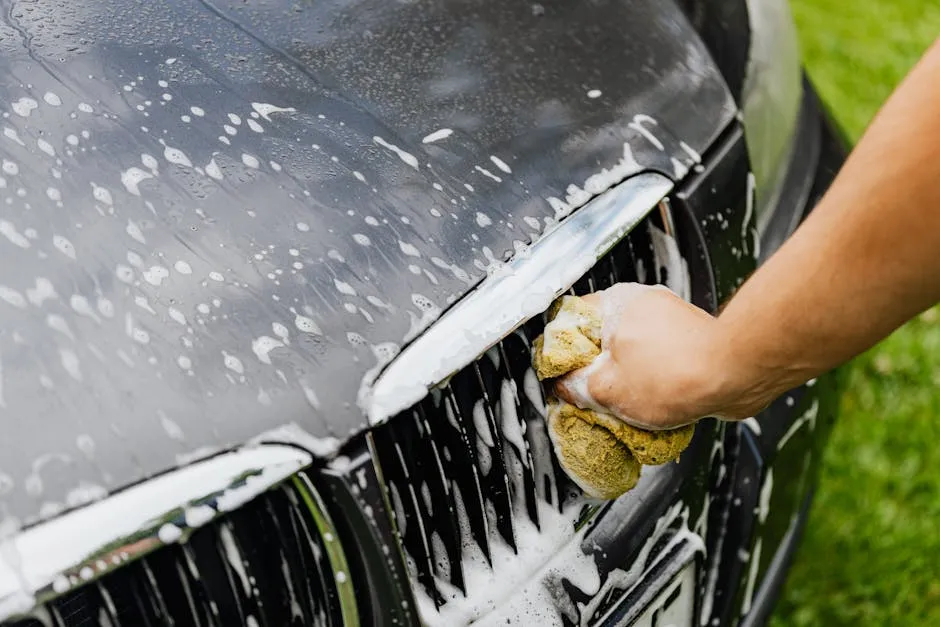
Two buckets, not one. One has your car shampoo in it, the other has clean water with a grit guard in the bottom. You wash a panel, then rinse your mitt in the clean bucket before you go back to the shampoo, so you're not dragging the grit you just lifted off the car straight back across the paint. That dragging is what puts the fine swirls into a finish, and on a coated car it's the one thing worth being fussy about.
The order of play
- Rinse it down first with the hose to float off the loose dirt before anything touches the paint.
- Foam it if you've got a foam cannon and let it sit a couple of minutes. That softens the grime so you're rinsing it away rather than rubbing it in.
- Wash top to bottom with a plush microfibre mitt — the bottom of the car is always the filthiest, so you leave it till last.
- Rinse it off properly with clean water.
- Dry it straight away with a big, soft microfibre towel. Up here especially, don't let a coated car air-dry in the sun — the water flashes off in this heat and leaves mineral spots behind on the surface.
It's about twenty minutes on a coated car, because the dirt doesn't grab the way it does on bare paint. That's one of the quiet upsides nobody mentions — the coating makes the weekly wash genuinely quick once you've done it a couple of times.
The products that help, and the ones that hurt
You don't need a cupboard full of gear. A handful of the right things, and a short list to steer around.
Worth having
- A pH-neutral car shampoo. The ones made for coated cars clean off the grime without stripping the water-shedding off your coating. That's all you want doing the regular washing.
- A ceramic top-up spray. A quick spray-on after a wash every couple of months tops up the slippery top layer and keeps the water beading tight. Think of it as a little refresh between the yearly service, not a replacement for it.
- A couple of plush microfibre drying towels. The thick, high-quality ones. Cheap, scratchy towels undo the very thing you paid to protect.
Best left on the shelf
- Wax, and anything labelled wash-and-wax. Wax sits on top of the coating and actually dulls its water-shedding rather than adding to it. You'd be paying to make a good coating perform worse.
- Dish soap and household cleaners. Too harsh — they strip the top of the coating and bring its life down.
- The automatic car wash. The brushes drag grit across your paint and the chemicals are mixed for uncoated cars. One trip through can do more harm than a year of careful hand washing.
- Clay bars. On a coated car, claying can take the coating off with the contamination. If something's bonding to the surface and won't wash off, that's a job for us, not for a clay bar.
How often to wash up here in Cairns
Down south you might stretch a coated car to a wash every two or three weeks and get away with it. Up here I'd say more like every week to ten days, and it's the climate doing it, not the coating falling short.
Live anywhere along the Northern Beaches — Trinity Beach, Palm Cove, Clifton Beach, Yorkeys Knob — and salt is settling on your paint every single day, even a fair way back from the water in town. Add the tropical dust and pollen that drift down off everything green up here, the bugs that plaster your front end on the run up the Captain Cook Highway, and the mineral spots our hard water leaves behind after rain, and there's just more landing on a Cairns car than a Melbourne one.
None of that hurts the coating if you stay on top of it. The whole point of the coating is that it lets that stuff sit on the surface instead of attacking the paint and its clear coat — your job is just to rinse it off before it bakes on. And because the coating makes that a quick job, the weekly wash is far less of a chore than people expect.
The yearly top-up that keeps it going
Even with a careful wash routine, the very top layer of a coating slowly wears — the water beads get a bit flatter, dirt starts grabbing a touch more, and that self-cleaning effect eases off. That's normal, and it doesn't mean the coating has packed it in. The base layer is still bonded to your paint and doing its job. It's just the surface that's tired.
So once a year or so — a bit more often up here, because the UV is harder on everything — we'll do a maintenance top-up. It's a proper decontamination wash, a look over the whole car to see how the coating's holding up, and a fresh layer of maintenance product to bring the water-shedding back. It's a bit like getting your car serviced: you change the oil so the engine lasts, and you top up the coating so it goes the distance.
While we're there it's also the moment to sort anything the year's thrown at it. Bird droppings are acidic and can mark a coating if they sit a day or two in this heat. Sap bonds on and resists a normal wash. Water spots build up in the hard-water suburbs. None of those are dramas if we catch them — we've got the products to lift them off safely without touching the coating underneath.
Signs it's asking for a bit of attention
You don't need to inspect it with a torch. A coating tells you when it wants a hand, and the tells are easy to read.
| What you notice | What it's telling you |
|---|---|
| Water sits flat instead of beading up | Top layer's worn — due a top-up, not a redo |
| Car gets grubby faster than it used to | The self-cleaning is fading; refresh it |
| Gloss looks a bit duller, less "wet" | Surface needs a maintenance layer |
| Spots that won't wash off | Bonded minerals or contamination — let us look |
Nine times out of ten, none of that means the coating's finished. It's the surface asking for a top-up, sometimes a decontamination wash, and you're back to beading. If you're not sure which it is, that's exactly the kind of thing to send me a photo of.
When you honestly don't need us at all
I'd rather you spent your money in the right spot than the biggest one, so here's the straight version. If you're keeping up the weekly wash and the water's still beading nicely, you do not need to book anything — the regular top-up spray you can do yourself at home is plenty to tide a coating over between services, and there's no shame in stretching the professional visit out to once a year or even a little longer on a low-kilometre car that lives undercover.
And if you're about to sell the car, don't pour money into maintaining a coating you won't be around to enjoy — a good pre-sale detail does far more for the photos and the price. Match the spend to the car. When it does need us, it's usually a quick refresh rather than anything dramatic.
Questions we get asked a lot
How long do I have to wait before washing a new ceramic coating?
Keep it dry and undercover for the first day or so while it cures, and leave it a good week before the first proper wash. The coating needs that time to harden and bond, so a wash too early can leave marks set into the coating itself.
How do you wash a ceramic coated car?
Two-bucket method, a pH-neutral car shampoo, a soft wash mitt, top to bottom, then dry it off straight away with a clean microfibre towel. Skip the automatic car wash. It's the same gentle wash that's good for any car, just more important on a coated one.
How often should I wash a ceramic coated car in Cairns?
Up here, roughly every week to ten days. The coating does most of the work, so it's a quick wash, but the salt, bugs and tropical dust still settle on the surface and are better off before they bake on.
Can I use wax on a ceramic coated car?
No need, and it works against you. Wax and wash-and-wax products sit on top of the coating and dull its water-shedding, so you're paying to make a good coating perform worse. A pH-neutral shampoo and the odd ceramic top-up spray is all it wants.
How do I know if my ceramic coating is wearing out?
Watch the water. When it stops beading into tight little drops and starts sitting flat, and the car gets grubby faster than it used to, the top layer is tired. That doesn't mean it's failed, just that it's due a top-up rather than a redo.
Do I need to bring a coated car back to the detailer?
Once a year or so for a top-up in this climate, plus any time something acidic has been sitting on it — a bird dropping, sap, or stubborn water spots. A quick look tells us whether it just needs a refresh or a proper decontamination, and there's no charge to be told.

Coating due a look?
Send us a photo of your paint and we'll tell you straight whether it just needs a top-up or a proper decontamination — and if it's still beading nicely, we'll tell you that too. Mobile across Cairns.
Call 0468 077 474