

How Much Does Paint Correction Cost in Cairns? (2026 Guide)
It is the question nearly everyone leads with before they ring around, and fair enough — you want to know what you are up for. So I will just say it plainly, no dancing around it. The honest catch is that "paint correction" is one of those jobs where the number depends a fair bit on your actual car, so I will give you the going rate and then walk you through what moves it.
What paint correction costs in Cairns
Roughly what you will pay across Cairns in 2026 looks like this. Prices move a bit from one detailer to the next depending on how many stages are involved and what is included, but most land somewhere in these ranges.
| Service | Typical price in Cairns |
|---|---|
| Single-stage cut & polish (light swirls, gloss back) | $325 – $550 |
| Two-stage correction (heavier swirls, water spots, oxidation) | $450 – $750 |
| Multi-stage / show-level (severe, or full ceramic prep) | $700 – $1,000+ |
Where you land in each range comes down to your car's size and how rough the paint is — a big 4WD or a badly oxidised bonnet sits up the top, a tidy little hatch down the bottom. These include the decontamination wash, clay bar and a protective sealant to finish, not just the cutting itself.
Paint correction vs a polish — they're not the same job
There is a lot of confusion here, and it is worth clearing up before you compare quotes, because the two words get used as if they mean the same thing.
A hand polish is really just a shine layer. There is no cutting agent in it, so it makes the paint look lovely and glossy for a few weeks without actually removing anything — the swirls and scratches are still under there, you just cannot see them in that moment. It is a bit like a coat of makeup on the paint.
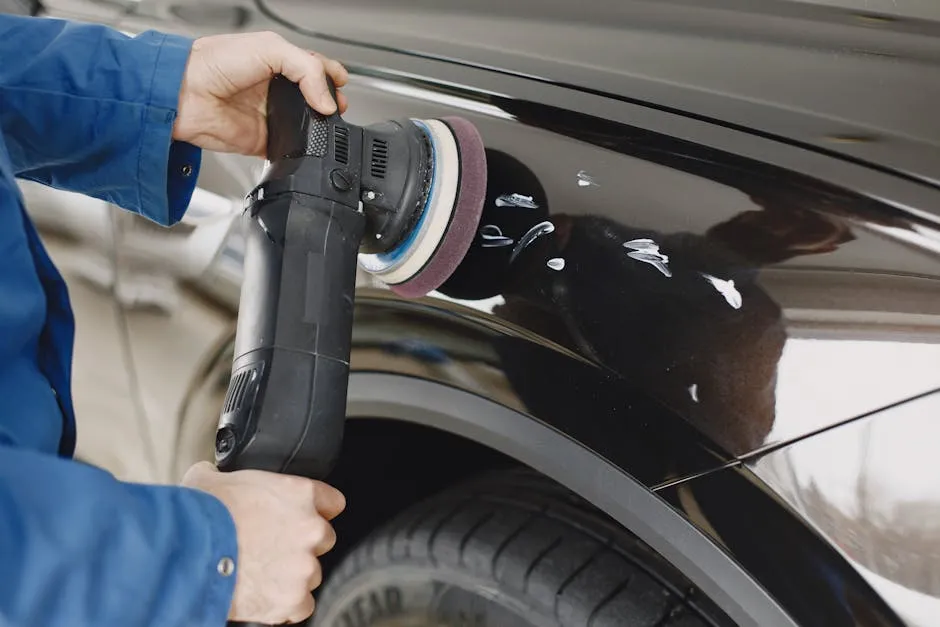
Paint correction is a machine cut and polish, and it is a different animal. The machine takes off the very, very top microscopic layer of clear coat, and that is what actually removes the swirls and the light scratches rather than hiding them. The team measures the paint first, picks the compound and pad to suit it, and works panel by panel. So where the polish is the makeup, correction takes the makeup off and clears up the skin underneath, if that makes sense. One masks the problem, the other repairs it. That difference is the whole reason correction costs more.
Single-stage, two-stage, and how far we go
The reason there is a range, not one flat number, is that "correction" can mean one careful pass or three. Plainly, this is what each one is.
Single-stage
One pass with a cutting compound and a finishing pad over the whole car. It lifts most of the lighter stuff — fine swirls, light water spotting, a bit of dullness — and brings the gloss back. For a lot of daily drivers in reasonable nick, this is genuinely all they need. On a near-new car it is a couple of hours; with the team on it, three to four. Nine times out of ten this is the tier we recommend, and we will not push you past it if it does the job.
Two-stage
Two passes — a heavier cut first to take out the deeper marks, then a finishing pass to refine the surface and remove any haze the cutting stage leaves behind. This is the one for a car that has been a bit neglected, never properly looked after, or has the kind of water-spot etching Cairns is so good at. It takes the better part of a day.
Multi-stage
Three or more passes with progressively finer compounds, kept for the severe cases — heavily oxidised paint, or a car being prepped for a ceramic coating where the paint needs to be as close to flawless as it physically gets. It is the most thorough and the dearest, and most cars honestly never need it.
What moves the price up or down
If you take one thing from this, take this: the biggest thing setting your price is not the suburb or even the detailer, it is your car. A few things nudge it.
Your car's size
More panels, more glass, more hours. A little Mazda 3 and a LandCruiser are two very different afternoons, so the same service can sit a few hundred dollars apart at the two ends. A dual-cab ute like a HiLux or a Ranger sits in the middle. That is why anyone quoting you a firm price without asking what you drive is having a guess.
How rough the paint is
A two-year-old car with light swirls needs a lot less work than a ten-year-old that has never been polished and has spent its whole life in the Cairns sun. Worse condition means heavier cutting, more passes, and more time on the car — which is the difference between single-stage and two-stage in that table above.
How much clear coat there is to work with
This is the bit most people do not know about, and it is important. Every correction takes off a thin layer of clear coat, and there is only so much there — especially on newer cars, where manufacturers have been allowed to lay the clear coat on a lot thinner than they used to. So the team measures your paint thickness before they start, and if it is already thin from previous polishing or from the factory, we have to be more conservative about how far we can safely go. We would rather tell you that upfront than cut into paint that cannot take it.
How many stages it needs
As above — single-stage is the most affordable, multi-stage is the most thorough and the most expensive. I quote every job myself, and the rule we go by is the fewest stages that get you the result you are after. We are not going to talk you up to a three-stage when a single will do, because that is exactly the kind of upsell that gives this trade a bad name.
Why Cairns cars often need a bit more
I will get a little opinionated here. The same car needs more correction up here than it would down south, and it comes down to a few things the rest of the country does not cop the same way.
- The UV. It regularly hits 13 or 14 on the Bureau of Meteorology's Cairns UV forecast in summer — that is "extreme" on the official scale — where Sydney sits around 6 to 8. UV breaks down clear coat faster than almost anything, and we see paint oxidising on cars only two or three years old, which just does not happen down south.
- The salt. Live anywhere along the Northern Beaches — Trinity Beach, Palm Cove, Clifton Beach, Yorkeys Knob — and salt is settling on your paint every single day, dulling it and chewing at the clear coat.
- Water spots. Hard water plus brutal sun bakes the spots in, and the etched ones need heavier cutting to lift. We get into this in our water spot guide if that is the issue you are chasing.
- The wet season. Months of sap, bird mess and bugs, and in this heat that stuff etches into bare paint within a day or two. It all leaves marks that need correcting once the season eases off.
So a car that might need a single-stage in Sydney often needs a two-stage in Cairns. It is not that the car was looked after worse — the environment up here is just a fair bit harsher.
When it's worth it — and when it honestly isn't
This depends on what you are after, but I would rather steer you to the cheaper option than sell you something you do not need.
It is worth it if you are keeping the car a few more years — correction plus a bit of protection holds the paint, slows the next round of damage, and costs a fraction of a respray down the track. And it is one of the best-value things you can do before selling, because corrected, glossy paint photographs better and presents better at inspection, and buyers read it as a car that has been cared for.
But I am not going to tell you to book the dearest job if you do not need it. If your scratches are the kind you can feel with a fingernail, I will be really honest with you — those have gone through the clear coat into the base coat, and no amount of cutting brings them back. That is a paint repair, not a correction, and paying for a multi-stage will not fix it. And if your clear coat is already thin from years of polishing, there may not be much left to safely work with. In both of those cases we will tell you straight before you spend a cent, even if it means we do not get the job.
Pairing it with a ceramic coating
This is the combination we recommend most often, and the logic is simple: correction gets your paint to its best possible condition, and a ceramic coating then locks that condition in and protects it from the Cairns climate.
The order matters more than people realise. A coating seals in whatever is underneath it, good or bad — so if you coat over swirls, you have just preserved the swirls under a glassy layer for years. That is why we never coat a car that has not been cut and polished first. On a used car the correction is built into the ceramic price for exactly that reason, which is why a new-car coating starts from around $1,000 and a used-car one — where the paint needs correcting first — starts a bit higher, from about $1,325.
Done together it is more cost-effective than booking them separately, and it spares you cutting the paint again next year, since the coating protects the fresh finish. There is more on how the coating itself stacks up in our piece on whether ceramic is worth it in Cairns.
So where does Posh Wash sit?
Fair question, since I have just walked you through everyone's pricing. We sit at the quality end of those ranges — not the cheapest in town, and well under what a dealership charges to wrap a ceramic over the top of it, which is usually somewhere between $2,000 and $4,000. But the right number really does depend on your actual car and your actual paint, so rather than throw a figure at you here, we would rather have a quick look and quote you straight, so the number you hear is the number you pay rather than a "from" price that climbs once we are on the job.
Questions we get asked a lot
How much does paint correction cost in Cairns?
A single-stage cut and polish runs from around $325, and a heavier two-stage from about $450, climbing with the size of the car and the state of the paint. A big 4WD or a badly oxidised car sits up the top; a tidy little hatch down the bottom. Where you land depends mostly on your car's size and how rough the paint is.
What's the difference between paint correction and a polish?
A hand polish is just a shine layer with no cutting agent, so it looks glossy for a few weeks without removing anything — a bit like makeup over the paint. Paint correction is a machine cut and polish that takes off the very top microscopic layer of clear coat, which actually removes swirls and light scratches. One masks, the other repairs.
Will paint correction remove deep scratches?
Run a fingernail over it. If you can feel it, it has gone through the clear coat into the base coat and correction won't lift it — that needs repainting. If you can't feel it, it's sitting in the clear coat and a cut and polish will take it out. We'll tell you honestly which kind you've got before you spend a cent.
How often can you cut and polish a car?
Only once every year or two, because every correction removes a thin layer of clear coat and there's a limited amount to work with. That's exactly why protecting it afterwards with a sealant or ceramic matters — so the result lasts and you're not back cutting the paint again next year.
Do you need paint correction before a ceramic coating?
Yes, and a good detailer won't skip it. A coating locks in whatever's underneath, good or bad, so coating over swirls just preserves them forever. We never coat a car that hasn't been cut and polished first, which is why on a used car the correction is built into the ceramic price.
Why is Cairns harder on paint than down south?
Extreme UV that hits 13 or 14 in summer, salt off the coast settling daily, hard-water spot etching, and a wet season of sap, bird mess and bugs. We see paint oxidising on cars only two or three years old up here, so a Cairns car often needs a touch more correction than the same car would down south.

Want a real number for your car?
Send us a photo of your paint and we'll come back with a straight quote — and we'll tell you honestly if a lighter polish, or no correction at all, is the better call for your car.
Call 0468 077 474