

4WD Detailing After Off-Road: The Post-Trip Clean Guide for Cairns
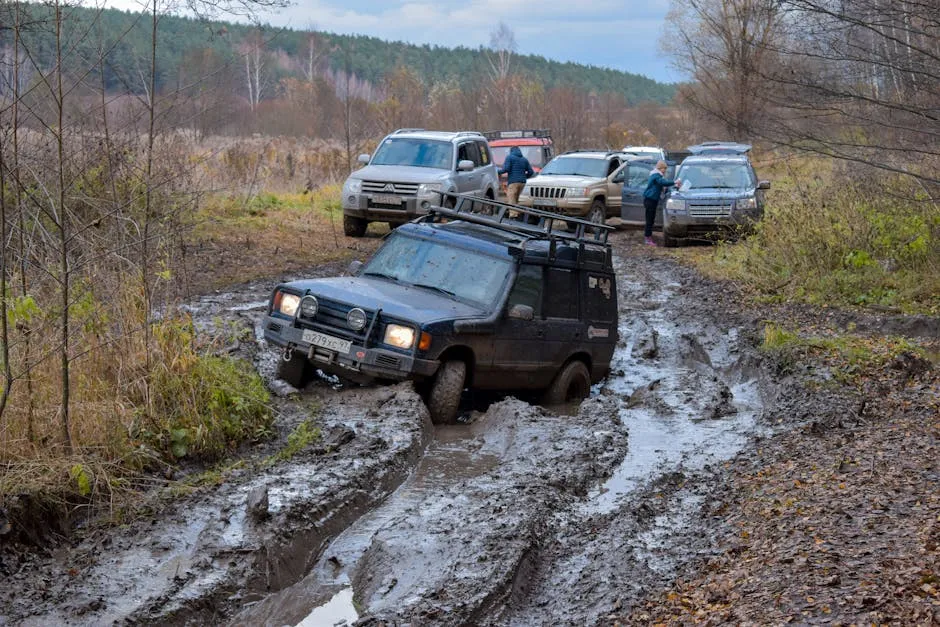
If you've got a 4WD up here, you bought it for a reason. Cape Trib, the Bloomfield Track, a beach run at Wonga, creek crossings on the way to Cooktown — this part of the world has some of the best off-road driving in the country. The catch is the cleanup, and what we see all the time is someone hosing the worst of it off in the driveway on a Sunday arvo and calling it done. Fair enough, you're tired. But a few months on, that's the rig with a rusting underbody and an interior that smells a bit like a swamp.
So here's the straight version of a proper post-trip clean for a Cairns 4WD — what to do yourself, what to leave to us, and the bits people genuinely don't need to bother with.
Cairns is 4WD heaven, and it's hard on a rig
I'm not exaggerating when I say Cairns is one of the best 4WD bases in the country. Within a couple of hours you've got a fair bit on offer, and every one of them leaves something behind on your vehicle.
- Cape Tribulation and the Daintree — rainforest tracks and creek crossings, and some genuinely challenging sections once the wet sets in.
- The Bloomfield Track — about 30km of famous 4WD-only track between the Daintree and Cooktown, with creek crossings that can be waist-deep in the wet.
- Cooktown via the inland route — corrugations, bulldust and river crossings.
- Beach driving — Wonga Beach, the Ellis Beach access and various spots up and down the coast, where it's salt rather than mud doing the damage.
- Tablelands tracks — that red volcanic soil that stains everything it touches.
Different terrain, same upshot. Each of these leaves your 4WD needing a bit more than a quick spray.
Why a hose-off on its own falls short
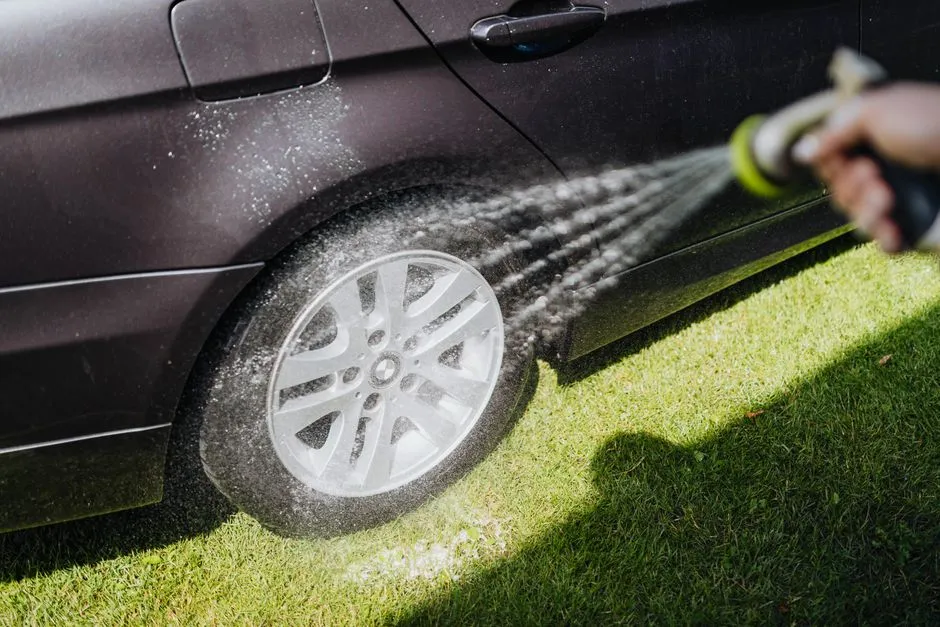
I get it, and I'm not about to tell you a rinse is pointless — it isn't. Getting the worst of the mud off the same day is genuinely the best habit you can have. But a garden hose has its limits, and it helps to know what they are so you're not caught out later.
- It doesn't reach the underbody. Mud and sand pack into the chassis rails, suspension and brakes — tight spots a hose can't shift with enough pressure.
- It doesn't dissolve salt. After beach driving or coastal creek crossings, salt is sitting in everything, and water alone won't carry all of it away.
- It won't pull sand out of the carpet. Sand works down into the fibres, the seat rails and the vents, and even a vacuum struggles — you really need extraction for that.
- Low pressure can make it worse. A weak stream tends to push mud further into the seals rather than clearing it out.
So a rinse is the start of the job, not the finish of it, if that makes sense.
What mud, sand and salt actually do
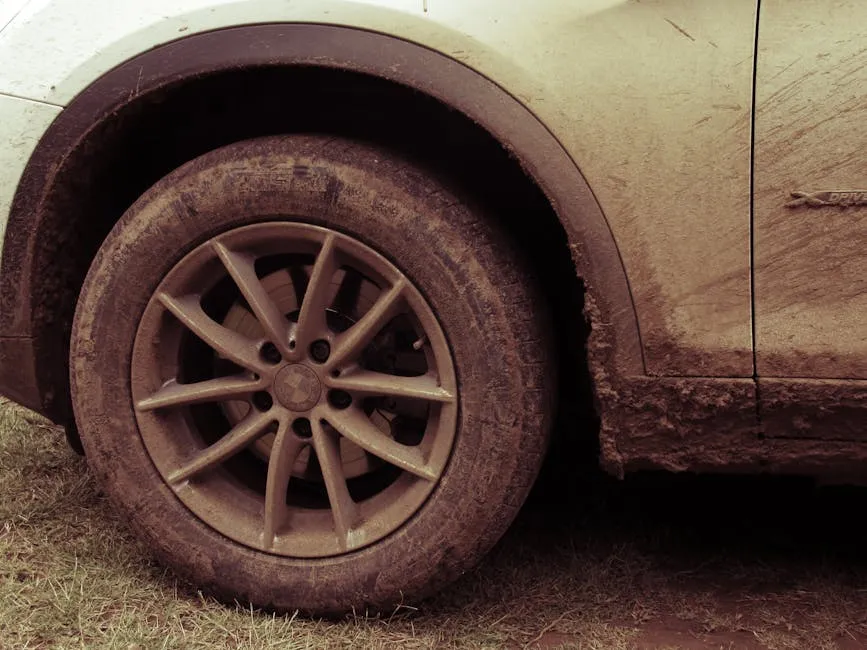
It's worth knowing what you're cleaning off and why it matters, because once you've seen what it does you tend not to skip the underbody again.
Underbody rust
This is the big one, and it's why we bang on about the underbody. Mud holds moisture against bare metal for days, sometimes weeks, and in Cairns humidity that trapped damp is exactly what rust feeds on. We've seen near-new utes with surface rust starting underneath inside a couple of years, almost always on rigs that were hosed on top but never cleaned properly underneath. The chassis rails, cross members, diff housings and suspension mounts cop it first, and once it gets a foothold there it's dear to fix and you never fully get it back.
Brake contamination
Sand and grit pack into the rotors, calipers and pads, and you'll usually hear it — that grinding or squeal after a trip. Left there, it chews through pads and rotors well before their time. A set that should comfortably do 60,000km can be gone at half that if it's copping repeated sand without a clean-out.
Interior sand
Sand is abrasive, plain and simple. Every time you sit down or slide your feet across the carpet it's working like fine sandpaper on the fabric, the leather and the seat-rail mechanisms. It also gets into the window regulators and door hinges, which is where the squeaks and the sticky seats start.
Seals and trim
Mud that dries in the door seals, window channels and body trim cracks and hardens like cement. It forces little gaps in the rubber, and those gaps then let water and dust in during normal driving. We see it constantly on rigs that do regular Bloomfield runs without a proper clean afterwards.
The post-trip clean, step by step
Here's the order we work in on a 4WD that's come back from a trip. A good chunk of this you can do yourself with a bit of gear and an afternoon — I've flagged the bits that are genuinely worth handing over.
1. Pre-rinse, within a day
Don't let the mud set any longer than it has to. A high-pressure rinse within a day of getting home makes everything after it far easier. Hit the wheel wells, as much of the underbody as you can reach, and the door jambs.
2. Underbody wash
This is the step most people skip, and it's the one that matters most. You want a pressure washer with an underbody attachment — the kind that rolls under and sprays upward — and you want to get every bit of the chassis, suspension, diff housings and exhaust. If you've done creek crossings, pay extra mind to wherever debris has packed in. This is the one I'd most often hand to us, because the right attachment and a hoist reach what a driveway setup can't.
3. Wheels and brakes
Pull the wheels off if you can. Clean the calipers, rotors and wheel wells with a proper wheel cleaner and a brush to clear the embedded grit that causes the noise and the early wear.
4. Exterior wash
A full contact wash with a pH-neutral shampoo. Give the panel gaps, roof-rack mounts, snorkel joints, aerial bases and any aftermarket bits a once-over with a detailing brush — mud loves to hide in all of those.
5. Door jambs and seals
Open every door, the bonnet and the tailgate, and clean the jambs, hinges and rubbers with a microfibre and an all-purpose cleaner. This is where the cement-like crust forms if you leave it.
6. Interior extraction
Vacuum first, then extract. A normal vacuum won't lift sand out of the carpet fibres — you need a hot-water extraction machine for that. Pull the floor mats and do them separately, and get into the seat rails, the console and the door pockets.
7. Interior wipe-down
Last, the hard surfaces — dash, wheel, controls, screens, door cards — with a proper interior product rather than household cleaner. Up here, leaving organic muck like mud or plant matter on the inside is basically an open invitation to mould, so don't rush this one.
The underbody is the bit that matters
I've pulled this out on its own because it earns it. Underbody corrosion is the number-one thing that quietly kills 4WDs in the tropics, and it's almost entirely preventable.
Think of what's at stake. A fresh set of chassis rails for a big LandCruiser runs into the thousands fitted, and a diff housing isn't far behind. An underbody wash after a trip costs you twenty minutes and some water. That's the maths, and it's not a close call.
If you're off-road regularly — say monthly or more — I'd have a professional underbody treatment done once or twice a year on top of your own washes: a proper decontamination followed by an underbody sealant that puts a barrier between your metal and the salt and damp.
Getting the sand out of the inside
Sand is one of the most destructive things for an interior, and up here it's everywhere — beaches, that red Tablelands soil, general tropical dust. These are the spots people miss when they're doing it themselves.
- Seat-rail mechanisms. Sand gets into the sliding rails under the seats, grinds the mechanism and eventually the seat won't slide right.
- Air vents. Fine dust circulates through the cabin air system — worth changing the cabin filter after a few dusty trips.
- Seatbelt retractors. Sand in there can make a belt retract slowly or jam.
- Boot and cargo seals. Grit packs into the tailgate seal and that's where the water leaks start.
- Under the floor mats. People vacuum the mats but forget to lift them and do underneath.
A proper interior detail with extraction gets the lot of these in one go, which is why it's the one interior job I'd hand over rather than chase around the cabin with a shop vac.
Making the next clean easier
A bit of prevention up front saves you a lot of scrubbing later. Here's what we'd suggest for any Cairns 4WD that's out in it regularly.
- Ceramic coating on the exterior. This is the big one for time saved — mud and sand slide off coated paint instead of bonding to it, so the post-trip wash takes about half as long. Worth a read of our ceramic coating page if you're weighing it up.
- Underbody sealant. A professional-grade coating that shields the chassis and components from salt and moisture between washes.
- Interior fabric protection. A sealant on the carpets and seats makes sand and mud lift out far more easily and helps fend off staining from that red Tablelands soil.
- Heavy rubber floor mats. The ones with raised edges catch the sand and mud, and you can pull them out and hose them off in seconds.
How often, honestly, for your kind of driving
There's no single right answer here — it depends on how hard your rig works. Here's roughly how we'd split it.
Weekend warriors — off-road once or twice a month
- Quick underbody rinse and exterior wash after every trip (do this yourself).
- Interior vacuum after every trip.
- A full detail with extraction every few months.
- Professional underbody treatment roughly every six months.
- Ceramic refresh once a year or so.
Daily drivers on dirt — rural blocks, unsealed roads
- Weekly exterior wash, focusing on the wheel wells and lower panels.
- Interior vacuum every couple of weeks.
- A full detail every couple of months.
- Professional underbody treatment roughly every four months.
- Cabin air filter every six months rather than yearly — Cairns dust is heavy enough that the manual's interval is a bit optimistic.
When a DIY rinse is all you need
Now the honest bit, because I'd rather you spent your money where it counts. You don't need to book a detail every time the rig gets dirty, and plenty of trips genuinely don't warrant one.
If it was a quick beach run on hard-packed sand and you gave it a thorough rinse the same day, including the underbody, you're sorted — save the full detail for when it's actually earned it. If it's a work rig that's filthy again by tomorrow, there's no sense in a big extraction this week. And nine times out of ten, the most valuable thing isn't the dearest service on the list — it's the five-minute hose-off you do yourself before the mud sets.
Where it's worth handing over is the underbody wash done properly, an interior extraction after a sandy or muddy run, and a full reset every few trips to undo what builds up between them. That's the split that keeps a 4WD going for years rather than wearing it down quietly.
A quick word on cost
Since people always ask: across Cairns a mini detail for a 4WD tends to run about $150 to $300, a full interior with extraction $275 to $500, and a full exterior or ultimate detail anywhere from $325 up to around $1,000 depending on the size of the rig and how rough it's come back. A big LandCruiser fresh off the Bloomfield Track sits up the top end; a tidy dual-cab that's had a careful beach day sits lower. We're not the cheapest in town, but the right number really does depend on your actual rig — you can see where we land on our price list.
Questions we get asked a lot
How do I clean my 4WD after off-road in Cairns?
Get to it within a day or so, before the mud sets. Pre-rinse, then wash the underbody properly, clean the wheels and brakes, wash the body and door jambs, and extract the sand out of the interior rather than just vacuuming. The underbody is the step most people skip, and up here it's the one that matters most because trapped mud holds moisture against bare metal.
Is hosing my 4WD off enough after a trip?
For a quick beach run, a thorough rinse the same day is genuinely fine. After mud, creek crossings or salt, a hose doesn't have the pressure to clear the underbody, it won't dissolve all the salt, and it can't pull sand out of the carpet — it tends to push mud deeper into the seals. So a rinse is a good start, not the whole job.
Why does underbody washing matter so much in the tropics?
Mud packed into the chassis rails and suspension holds moisture against the metal for days, and in Cairns humidity that's exactly what rust needs. Underbody corrosion is the quiet killer of 4WDs up here, and it's almost entirely preventable with a proper wash after each trip plus an underbody treatment once or twice a year if you're off-road often.
Can I clean my 4WD myself or do I need a detailer?
Plenty of it you can do yourself, and honestly a quick rinse after every trip is the single most valuable thing you can do. Where a detailer earns their keep is the underbody wash with a proper attachment, interior sand extraction and the occasional full reset — roughly every few trips, or a couple of times a year on top of your own rinses.
How much does 4WD detailing cost in Cairns?
A mini detail for a 4WD runs about $150–$300, a full interior with extraction $275–$500, and a full exterior or ultimate detail from $325 up to around $1,000, depending on the size of the rig and how rough it's come back. A big LandCruiser off the Bloomfield Track sits up the top end.
Does ceramic coating help an off-road 4WD?
It does, mostly by making the cleanup easier — mud and sand slide off coated paint instead of bonding to it, so a post-trip wash takes half the time. It won't stop scratches from scrub or rock, so it's no substitute for the wash, but on a rig that's out most weekends it pays for itself in saved hours.

Just got back from a trip?
Send us a photo of the rig and we'll tell you straight what it actually needs — underbody, extraction, the lot, or just a tidy-up. We come to you across Cairns, no pressure either way. Give us a buzz on 0468 077 474.
Call 0468 077 474