

Post-Wet Season Car Detail Checklist for Cairns (Your March–April Reset)

It's March, the worst of the wet is behind us, and your car copped a hammering whether you noticed or not. Months of heavy rain, humidity sitting up around the 85 per cent mark, daily storms and salt off the coast — it all adds up, and a lot of it works away quietly where you can't see it. So here's the checklist we run through on every car that comes to us this time of year. Have a read, have a look at your own car, and sort what needs sorting before the dry season locks it in.
What the wet just did to your car
Even a garaged car doesn't get off scot-free up here. The mix of months-long humidity, heavy rain, warm air and salt drifting in off the coast goes at every part of the car, inside and out, and most of it is slow and invisible rather than obvious.
We see the same thing every March. Cars that looked perfectly fine in November turn up with mould under the seats, water spots baked into the paint and a damp, earthy smell that no air freshener will shift. The bright side is that almost all of it can be undone if you get onto it now. The catch is that left until June, a fair bit of it stops being a clean-up and starts being a repair.
The interior is where it hits hardest
This is the one that catches people out. Your car's interior is basically a sealed box that's been sweating in tropical humidity for months — which is about the most welcoming home you could build for mould. So this is where I'd point you first.
Where to actually look
- Under the seats. Slide the front seats forward and have a look underneath. Mould loves dark, still, damp spots, and any crumbs or spilled drink from back in spring are now feeding it.
- The seatbelt webbing. Pull a belt all the way out and check it over. The belts soak up moisture off your hands and the air, and mould creeps into the fibres where they retract into the pillar.
- The boot carpet. Lift it up and check the spare-tyre well. Water sneaks in through tired tail-light or boot seals and pools under there for months without a peep — we've found standing water in boot wells more times than I can count this time of year.
- The door seals. Run a finger along the rubber. Green or black mould likes to set up in the folds where the air never moves.
- The headlining. Look up. Water stains overhead usually mean a leak — a blocked sunroof drain, an antenna seal or a roof-rack bolt that's let go.
The simple smell test
Shut the car up, leave it sealed for an hour on a warm day, then open the door and have a sniff. If it's musty, damp or a bit earthy, there's mould somewhere, even if you can't see it yet. The spores are already there.
Whatever you do, don't just hang a tree off the mirror and call it done. That's covering the symptom while the actual problem keeps spreading underneath. The source needs finding and treating properly, if that makes sense.

Your paint took a beating you can't always see
Months of tropical rain does a few specific things to your paint, and most of it shows up as a dullness you can't quite put your finger on.
Water spots
Rain up here isn't clean water — it carries minerals, dust and whatever's in the air. Every time it rained and then dried on your car, and that happened a hundred-odd times over the wet, it left a fresh ring of mineral deposit behind. By March some cars have so many layered up that the paint reads permanently hazy. Our water spot removal guide goes deeper on this if you want it.
Oxidation
UV is brutal here even on a grey, drizzly day, and UV plus moisture speeds paint oxidation right up. The flat surfaces cop the worst of it — bonnet, roof, boot lid. If your paint looks chalky or flat next to how it looked back in spring, that's oxidation setting in.
Tree sap, bird and bat mess
Sap, bird droppings and bat droppings — a very Cairns problem with the flying-fox roosts around the place — all bond harder to paint in warm, damp air. If any of it sat on your paint through the wet without getting washed off, it may well have etched into the clear coat by now.
Rubber and trim
The rubber seals and plastic trims can come up white and chalky after a long stretch of UV and moisture. It's only surface deep and purely cosmetic, but it makes the whole car look older and a bit sad than it really is.
The AC is probably growing something
Here's one that's about your lungs more than your duco. The AC evaporator lives inside your dash, and through the wet it has moisture condensing on it constantly — which makes it a permanently damp little corner, and you can guess what loves a permanently damp corner.
If the AC gives off a musty whiff when you first switch it on, that's mould, and you're breathing the spores every drive. It's extremely common up here — I'd say seven out of ten cars we check in March have some level of it going on. The fix is an anti-bacterial AC treatment: we run a hospital-grade sanitiser through the system, it kills the mould off the evaporator and through the ducting, and it takes about half an hour. You notice the difference the second you turn it back on.
Underneath is where rust quietly starts
This one gets skipped because you can't see it without getting under the car, but it's the one that turns into real money if it's left.
Cairns roads flood through the wet, and even shallow water carries silt, grit and road muck that sprays up into your wheel wells, suspension and chassis. If you've driven through any flooded stretches — and around here that's pretty much unavoidable — some of that is now sitting trapped in cavities under the car. Salt air on top of that is the real worry: salt on bare metal is exactly where surface rust gets going, especially on older cars or anything without factory underbody protection.
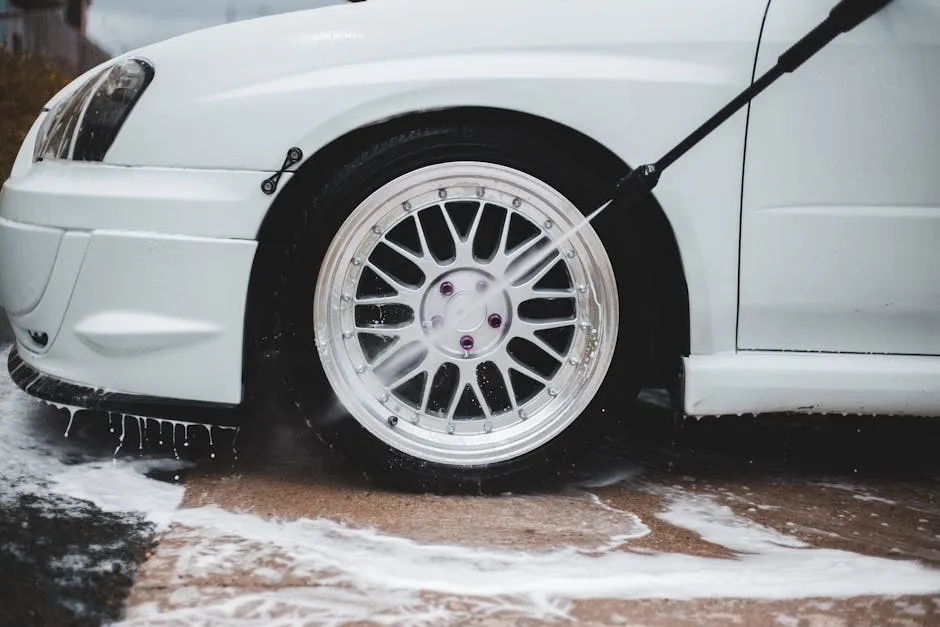
What helps is a proper underbody flush and a look. The team pressure-washes the wheel wells, suspension mounts and chassis rails clean, then checks for any rust just starting. Caught early it's a quick treat with a rust inhibitor. Caught a wet season too late, it's panel work, and that's a very different invoice.
The full reset, room by room
Here's the whole checklist we work through on a proper post-wet season reset. You can use it as a shopping list when you ring around, so you know exactly what you're asking for and what should be included.
Inside
- Full mould inspection — seats, carpets, boot, door seals, headlining
- Mould treatment with an anti-microbial solution wherever it's found
- Hot-water extraction through the carpets and fabric seats
- Leather clean and condition (the humidity actually dries leather out, odd as that sounds)
- An odour treatment to neutralise the musty smell at the source
- Anti-bacterial AC sanitise
- Dash, console and trim deep clean and steam
- Window tracks and seals cleaned out
Outside
- Decontamination wash with an iron-fallout remover and a clay-bar treatment
- Water spot assessment and removal
- A machine cut and polish for oxidation and etching, if the paint needs it
- Rubber and trim brought back
- Wheels and tyres deep cleaned
- Underbody flush and inspection
- A protective sealant, or a ceramic boost if the car's already coated
It's a bigger job than a regular detail, because you're undoing months of tropical punishment rather than just freshening the car up. But if you only do one proper detail a year, this is the one I'd pick, hands down.
Why this is the most important detail of the year
If you detail your car once a year and no more, do it now. Here's the honest reasoning behind that.
- Mould doesn't wait around. Left alone it works into the carpet backing, the seat foam and the headlining. What's a small treatment in March can turn into a full interior restoration by July.
- Water-spot etching only gets deeper. The mineral deposits keep eating in under UV. Spots that lift with a single pass in March can need a multi-stage correction by June — twice the work.
- Rust starts small and cheap. Surface rust underneath is easy and inexpensive to treat now. Left through another wet, it stops being surface and starts being structural.
- It holds your resale. Untreated wet-season damage permanently ages a car, and cars up here can drop value faster than down south partly because of exactly this. Looking after it through the wet protects what the car's worth when you come to sell.
What a reset costs, and when to skip it
Across Cairns, the going rate moves with your car's size and how hard the wet treated it, but here's roughly where things sit so you're not quoting blind.
| Post-wet job | Typical price in Cairns |
|---|---|
| AC sanitise or a spot mould treatment on its own | From around $120 |
| Full interior detail (extraction, leather, steam) | From around $275 |
| Exterior detail with cut & polish | From around $325 |
| Full "ultimate" reset (the lot, inside and out) | From around $599 |
Where you land depends on your car's size and condition — a big 4WD or a neglected interior sits up the top, a tidy little hatch down the bottom. The right number really comes down to your actual car.
And while I'd love to detail every car in Cairns this time of year, I'll be straight with you about when not to bother with the full reset. If your car lived in a garage through the wet, gets a regular wash and there's no musty smell when you seal it up, you might only need a good wash and an AC sanitise rather than the whole job. Match the work to what the car actually went through, not to the biggest invoice — and a good detailer will tell you that to your face rather than talk you up a tier.
If you are due for a bigger reset though, the dry season is also the right window to think about a ceramic coating or at least a fresh sealant, because you've finally got a stretch of reliable dry weather to cure it. A post-wet correction paired with a coating is about the best one-two we offer, and it sets the paint up for the six months of hard UV that's coming. You can see where everything sits on our price list if you want the detail.
Questions we get asked a lot
How do I get the musty smell out of my car after wet season?
An air freshener won't do it, because the smell is mould and you'd only be covering it. You need the source found and treated — usually under the seats, in the carpet backing or in the AC — then the fabric properly extracted and the AC sanitised. Once the source is gone, the smell goes with it rather than coming back in a week.
Can mould in a car be removed, or is it ruined?
Nine times out of ten it can be removed if you catch it in March or April while it's still on the surface. Once it works into the seat foam, carpet backing and headlining it's a much bigger job, and sometimes parts have to be replaced. The earlier you look, the cheaper and more fixable it is.
Why does my AC smell after the wet season?
That musty hit when you first turn the AC on is mould on the damp evaporator inside the dash — very common up here after months of humidity. An anti-bacterial AC treatment runs a sanitiser through the system, kills it off and clears the smell in about half an hour. Worth doing for your lungs as much as your nose.
How much does a post-wet season detail cost in Cairns?
It depends on your car's size and how hard the wet treated it, but a full reset in Cairns generally runs from about $275 for a thorough interior up to $599 and beyond for the full job with paint correction. A standalone AC sanitise or mould treatment sits lower. The right number comes down to your actual car.
Do I really need an underbody wash after wet season?
If you've driven through flooded roads or you live near the coast, it's worth doing. Silt, road grime and salt get flung up into the wheel wells and chassis and sit there, and on metal that's where surface rust starts. Flushing it out and catching any early rust now is far cheaper than a panel repair later.
When is a post-wet season detail not worth the full job?
If your car lived in a garage all wet season, gets washed regularly and there's no smell, you might only need a good wash and an AC sanitise rather than the full reset. A good detailer will tell you that honestly rather than talk you into the dearest option you don't need.

Not sure what your car needs after the wet?
Send us a photo of the inside and the paint and we'll tell you honestly what's worth doing — the full reset or just a wash and an AC sanitise. Mobile across Cairns, and we book up fast this time of year, so give us a buzz early.
Call 0468 077 474